


From Farm to First Bite: How Consumer Trends Are Reshaping Food and Agriculture
By Chef Amanda Haubrock, Cargill Culinary Advisor (August 11, 2026)
As a chef, I have always believed that every great meal tells a story.
Sometimes it’s about family. Sometimes it’s about tradition. Sometimes it’s about discovering a flavor you’ve never experienced before. But every memorable meal has one thing in common: it makes you feel something.

That is why I believe the future of food will not be defined by the next trendy ingredient or the latest technology. The future of food depends on understanding people, effectively connecting their needs across the food and agriculture system.
Long before an ingredient reaches my kitchen, farmers, manufacturers and ingredient experts have already made hundreds of decisions that shape what eventually appears on someone’s plate. Consumer trends may show up in restaurants and grocery stores first, but they begin much earlier across the food system.
Today, consumers aren’t asking food to do just one job.
They want meals that give them energy through a busy afternoon. They want dinner that feels comforting without leaving them feeling sluggish. They want something exciting enough to break the routine but familiar enough that the whole family will enjoy it. They want food that fits their budget, their schedule, their health goals and, increasingly, their values.
That’s a remarkably high bar.
As chefs, our job has never simply been to make food taste good. We are seeking to solve problems through food, often before consumers can even articulate what they’re looking for.
The conversations I have with customers have evolved over the last several years. Customers are still seeking flavor and meals that are visually beautiful and craveable. But there is an increased focus on questions such as…
Can this meal deliver more protein?
Can we make it easier to prepare?
Can it feel like restaurant food at home?
Can we create something healthier without sacrificing the experience people love?
Those questions aren’t competing priorities. They are becoming one conversation.
More than 60% of consumers say they are eating more protein. They are looking to protein for benefits such as satiety, energy, strength and value. At the same time, up to 75% of consumers across generations believe food and beverages can support active aging, longevity and everyday wellness. Consumers today want to know how food is going to benefit them and make them feel.

That shift has changed how culinary innovation happens.
When I begin developing a new dish, I don’t start by asking what ingredients are available. I start by asking who we are cooking for.
Is it a busy parent trying to get dinner on the table in twenty minutes? Someone grabbing lunch between meetings? A restaurant operator looking for consistency across hundreds of locations? Someone trying to eat more protein, more fiber, or simply cook more often at home?
Understanding that person shapes the decision that follow.
Only then do we begin building what we call the culinary “gold standard”— the ideal version of the dish. It’s the version that captures the flavor, texture, aroma and visual appeal we are ultimately trying to deliver.
From there, the real collaboration begins.
Chefs work alongside food scientists, consumer insight partners, sensory scientists, and operations teams to translate that gold standard into something that can be produced consistently and to scale. Together, we refine recipes and evaluate how agricultural ingredients perform through processing, preparation and the final eating experience, whether it’s prepared in a restaurant kitchen, purchased from a grocery store, or finished at home.
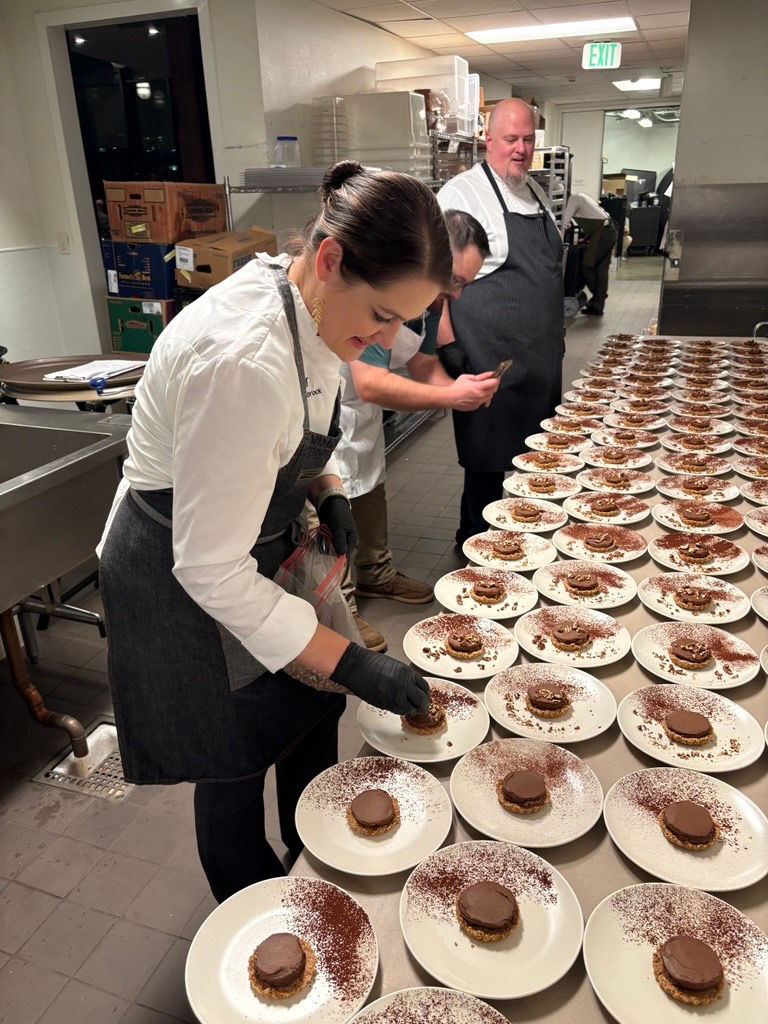
Consider what it takes to create a high-protein meal that has familiar flavors, can be prepared quickly, and still tastes freshly made. Delivering that experience could require the right crop variety or animal nutrition, an ingredient that maintains its texture during processing, a sauce that performs after freezing and reheating, and packaging that protects quality while reducing waste.
The consumer experiences one meal. Behind it are hundreds of interconnected decisions balancing flavor, nutrition, cost, manufacturing, sourcing, consistency, and agricultural performance.
One of the most exciting shifts I have seen as a chef is how adventurous consumers have become.
Global flavors that once felt unfamiliar are now finding their way into everyday meals. Sweet and spicy combinations, Korean-inspired sauces, tropical influences, Mediterranean ingredients and Latin American flavors are becoming part of the weekly dinner rotation rather than occasional restaurant treats.
The opportunity isn’t simply introducing something new. It’s helping people explore those flavors in ways that feel approachable and achievable at home.
Meeting that demand requires the entire food system to evolve. Farmers and producers are continually adapting to changing consumer preferences, while balancing growing conditions, economics and long-term productivity. For agriculture and ingredient suppliers, that creates new opportunities around the crops, spices, oils, grains and proteins that make those experiences possible.
At the same time, consumers are redefining convenience, and expectations are higher than ever. They want meals that are quick to prepare but still feel homemade. They want ingredients they recognize. They want products that fit real life without feeling like a compromise.
That means convenience needs to be considered throughout the value chain. And ingredients must withstand transportation, freezing and reheating while still delivering the color, texture and flavor consumers expect.
For chefs, that’s an incredibly inspiring challenge.
It’s also why collaboration across the food system has never mattered more.
The best culinary ideas don’t come from chefs working alone. They emerge when chefs, farmers, food scientists, ingredient experts, and manufacturers bring different perspectives to the same table.
Meals begin with strong crops and healthy animals. Advances in agriculture influence ingredient quality. Data and technology help producers make better decisions. Food scientists unlock new possibilities in formulation. Culinary teams translate those capabilities into meals people genuinely want to eat.
Every part of the system contributes to what ultimately arrives on someone’s plate.
Consumers may never see that entire journey, but it’s up to us to make sure they love the result.
For me, that’s the true measure of culinary innovation: when someone takes the first bite and says, “That was really good!”

Because when we understand people first, everything else, from science and technology to agriculture and culinary creativity, has a much clearer purpose.
Every memorable meal begins long before the first bite. It starts with farmers, continues through every stage of the food system, and comes to life through the collaboration of people dedicated to feeding others well.
As chefs, we're fortunate to play one part in that journey—but the best meals are only possible because so many others came before us. It’s about helping people live, eat and connect a little better, one meal at a time.
ABOUT THE AUTHOR

Chef Amanda Haubrock is a Minnesota native, born with a love of food and connection. Over her 15 years with Cargill, Chef Amanda has worked in the bakery, salt, dressings & sauces, texturizing solutions, protein, and chocolate spaces. In her role as Culinary Advisor, Chef Amanda strives to partner with our R&D, consumer insights, marketing, sales, and business teams to proactively lead in consumer insight driven innovation for our customers. Chef Amanda has a passion for innovation and holds an Innovation Catalyst Yellow Belt and is working towards her Green Belt.
When it comes to bringing folks together, that is Chef Amanda’s specialty. During the COVID-19 pandemic, Chef Amanda started a Facebook Live cooking show called “Food Science Fun.” During her live demos, Chef Amanda taught kids of all ages how to cook, bake, and the science intertwined.
Prior to joining Cargill, Chef Amanda assisted with recipe validation for America’s Test Kitchen in Boston and worked for General Mills in Minneapolis testing recipes to narrow down the top 100 contestants for the 44th Pillsbury Bake-Off Contest. Chef Amanda holds a culinary degree from Saint Paul College and earned her Masters of Food Science and Human Nutrition degree from University of Illinois.


