


World Bee Day: Looking Beyond the Honey Bee to Protect Pollinators
By Caydee Savinelli, Head of North America Stewardship at Syngenta (May 19, 2026)
Each year on World Bee Day on May 20, the agriculture community takes a moment to appreciate the role bees play in our food system. But one of the most common misconceptions I see, both inside and outside of agriculture, is that pollination begins and ends with honey bees.

The reality is much broader, which is good news because it provides more opportunities for all of us to play a part in protecting and engaging with our local pollinator communities.
If we focus too narrowly on one species, we risk missing the bigger opportunity, which is protecting the full ecosystem of pollinators upon which agriculture depends.
Pollination Is Bigger Than Bees
Honey bees have earned their place in the spotlight. They’re efficient, well-managed and essential to many cropping systems. They’re also relatively domesticated, as shown by the many amateur beekeepers popping up in rural and suburban communities. In the U.S. alone, there are an estimated 2.7 million honey bee colonies supporting agriculture, according to the USDA National Agricultural Statistics Service (NASS).
But they’re only part of the story.
Pollination is powered by a much more diverse network, one that includes native bees, flies, butterflies, beetles and even animals like hummingbirds and bats. In fact, more than 100,000 different species contribute to pollination across natural and agricultural systems.
Some of these contributors are easy to overlook. Flies, for example, are critical to pollinating crops like cacao. Without them, chocolate wouldn’t exist. Bats pollinate many fruit crops, particularly in warmer regions. Even butterflies, while less efficient than bees, play an important role simply because of the ground they cover.
This diversity is essential to our American food systems. Our food security depends on a range of pollinators that can adapt to different environments, weather patterns and landscapes. No single species can do the job alone, and that’s exactly why this is such an important story to tell.
Why It Matters More Than Ever

Pollinators sit at the center of our food system. Roughly 70% of the top food and fiber crops rely on pollination, notes the USDA, and about one out of every three bites of food we enjoy is connected to that process. These are foods people interact with every day, fruits, vegetables, nuts, seeds, even the spices and beverages, that make meals more enjoyable.
Beyond yield, pollination improves crop quality and supports plant diversity. Cross-pollination helps create stronger plants that are often more resilient to disease and environmental stress, which is something we don’t always see directly but absolutely benefits the system as a whole.
There’s also a broader economic impact. Pollination contributes billions of dollars in value to U.S. agriculture each year, reinforcing just how deeply connected pollinators are to both the farm and the food we rely on.
That’s why protecting pollinators isn’t just an environmental effort, it’s directly tied to the long-term viability and productivity of our industry.
Small Actions, Real Impact
The encouraging part is that supporting pollinators doesn’t require large-scale change. Some of the most effective actions are also the most accessible.
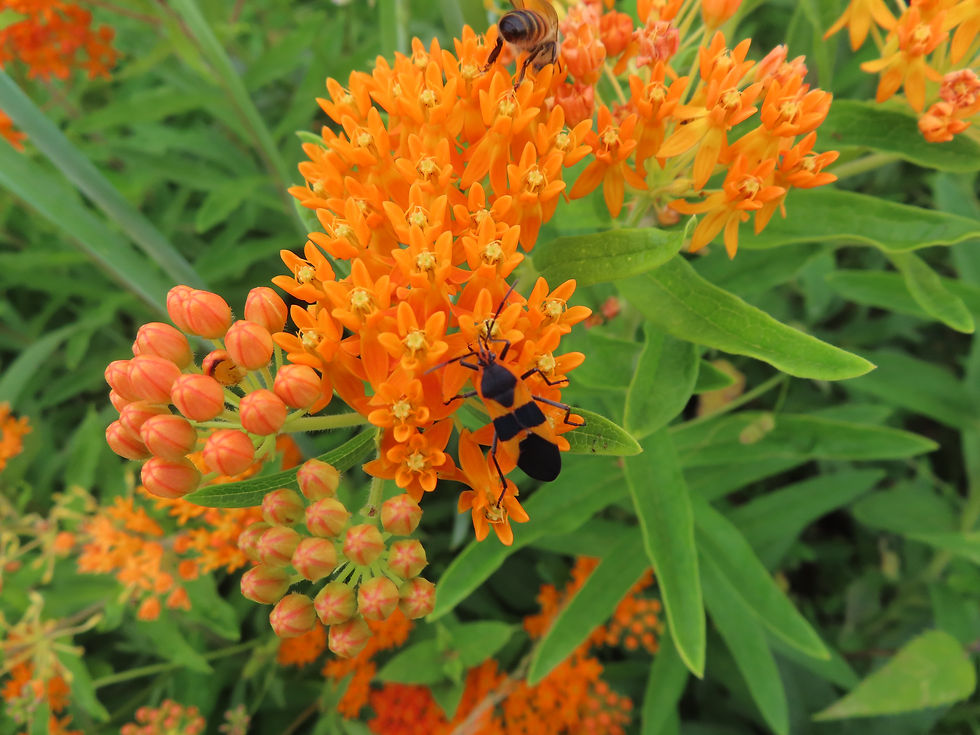
Planting a diversity of flowers outside of your house or apartment, especially native species that bloom at different times of year, can provide a steady source of food throughout the season. Even small spaces, like backyard gardens, patios or field edges, can make a meaningful contribution. It doesn’t have to be perfect.
One of the simplest ways to help is by creating habitat for native bees. Unlike honey bees, many native bees are solitary and don’t live in hives. They need safe, sheltered places to nest, which are often harder to find in more managed or urban environments.
That’s where something as simple as a mason bee house can make a difference. These small “bee boxes” are inexpensive, easy to set up and highly effective at supporting native bee populations. It’s a practical step that almost anyone can take.

Here is an example of a bee box I use at my own home. They’re much simpler and lower maintenance than a full-fledged beehive, and the bees they house are primarily non-stinging varieties as well. It’s a great entry point for people who want to get involved but may not have the time, space or experience to manage a traditional hive.
Just as important is recognizing that pollination is a shared system. Farmers, researchers, companies, communities and individuals all have a role in supporting it.
A Shared Responsibility
Across agriculture, there’s growing recognition that pollinator health is something we have to work on together. Efforts to create habitat, manage land thoughtfully and increase awareness all contribute to a stronger system, but none of them work in isolation.

What gives me optimism is that this is an area where progress is both visible and achievable. The practices that support pollinators are within reach, regardless of your location or background.
World Bee Day is a good reminder of how much we rely on pollinators, but it’s also a reminder that supporting them is something we can all participate in, no matter where we live or work.
The more we expand our understanding beyond just the familiar honey bees, the better positioned we are to support the full system that keeps our food supply moving, and build a deeper connection to the role each of us can play in that effort.
About the Author

Caydee Savinelli, Ph.D., is the U.S. head of stewardship, Syngenta Crop Protection, LLC Syngenta U.S. Savinelli has focused on pest management, product development, and stewardship throughout her 41-year career, working across the U.S., Europe, and Latin America. She holds a Ph.D. in entomology with a minor in crop science from North Carolina State University, an M.S. in entomology from The Pennsylvania State University, and a B.A. in biology from Gettysburg College. Her interest in agriculture and entomology began in childhood, inspired by time spent at her grandfather’s orange grove in Florida.


